Four years ago, the Philippine LGBT Chamber of Commerce was formed with the main goal of educating companies and corporations about Sogie—sexual orientation, gender identity and expression —and its accompanying workplace policies. That mission continues to this day, but with the chamber now highly focused as well on the 99.6 percent of the country’s business landscape: the micro, small and medium enterprises (MSMEs).With the chamber’s membership now at 42, which started at a mere four back in 2016, it sees signs that the Philippines is ready to become a nation where inclusivity is the norm in the workplace and the community at large.
“We feel that the movement is really coming now from the Filipino-owned micro, small, medium enterprises,” said Ronn Astillas, the group’s chair. “That means the consciousness toward diversity, equity and inclusion can easily be implemented or adopted because of the size of these companies. The owners, the founders are partnering with us, conducting trainings and looking at other nondiscriminatory mechanisms to implement in their companies.”Taking a holistic approach to inclusivity, the chamber is also working with local governments to further ensure that LGBT-owned businesses are supported in their localities, Astillas added. In the works since June is the Governance SOGIE Diversity and Inclusiveness Index, a study that will measure, against specific parameters, 12 local governments representing Luzon, Visayas and Mindanao, to see where they are in terms of their policies for diversity and inclusivity.
The study will look at how these localities address issues concerning the five areas of discrimination: public leadership; legal policy; periodic psychosocial and cultural biases; access to public goods and services; and commitment of public institutions to LGBT welfare. Results of the pioneering study, as it is the first in the Asean region, are expected to come out next year, Astillas said.
“We’ve been asked, why focus on inclusive localities?” Astillas added. “It’s because we believe that businesses can flourish in a locality that is accepting—a locality that allows LGBT on entrepreneurs to thrive.”A couple of such LGBT-owned MSMEs that have benefitted from the chamber’s efforts are adult toy store Frisky Ultd. and accounting company Numero Accounting and Consultancy Services Co.
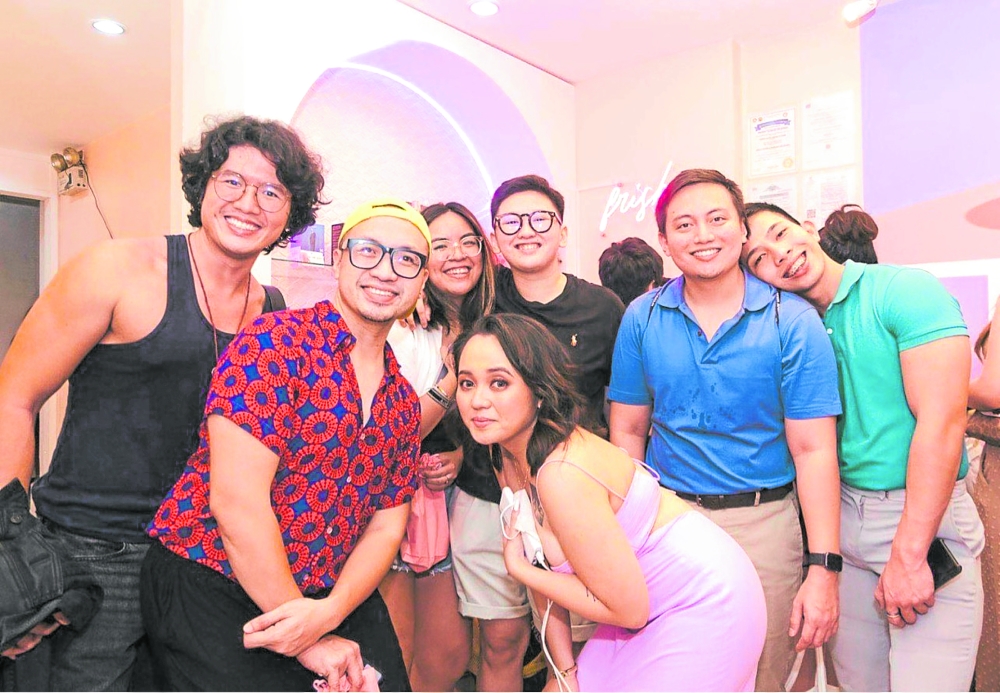
Safe spaceFrisky, established during the height of the pandemic by Neale Go and her partner Cyril Aclan, is located in San Juan City, where they are the only adult toy store in the area. As users themselves of adult toys, Go and Aclan found existing products in the market either too expensive or of low quality. As an LGBT couple, they also wanted safe space—both physical and digital—for them and their customers, so they would have a comfortable shopping experience.
“Being in a predominantly Catholic country still has setbacks when it comes to the acceptance of adult toys, [but] we’re so happy that millennials and GenZs are more open to sparking conversations, not just about toys, but about sexual health and self-exploration,” says Go.
And it’s these conversations that set Frisky apart from other adult toy stores, as they fully maximize their omnichannel presence and online engagement channels to regularly chat with their followers, or hold Q&A sessions simply through their Instagram stories. Go and Aclan also ensure that customers’ Frisky experience is personal and highly customized.
“I personally recommend different toys to customers depending on their needs and experience. In this business, you wouldn’t really want to be talking to a robot or AI,” Go says. “So being able to offer personal recommendations, tips, and even stories is something our clients appreciate so much! Can’t even count how many relationships and friendships I’ve formed helping out customers!”
More hearts than handsAs for Numero, the accounting company was founded in 2019 by transwoman Val Gabrido, who says that she is “quite proud” of how her identity helps distinguish her business in the accounting industry—on top of the fact that they develop cutting-edge, effective accounting solutions and tailor their services to the demands of the client.
“We view business owners as essential business partners rather than just clients,” Gabrido says. “’We establish connections and relationships. [And as members of] the Chamber, [we get to] encourage mutual inspiration and learning, and foster an inclusive, varied workplace.”As they expand their reach across the Philippines and seek out more businesses like Frisky and Numero, the Chamber is also crossing borders and growing its efforts across Asia through the LGBT Asia Business (LAB) Network, which they spearheaded in order to provide LGBT-owned businesses and allies across the region a platform to tackle certain themes and topics, exchange ideas and understand what’s going on in these countries—and eventually provide policy recommendations as a regional group.The LAB Network is gearing up to hold its first summit in—when else?—February next year, the love month, which is a nod to that the value and principle that has always guided the Chamber as they grow their organization: Love. As the Chamber’s late founder, designer Brian Tenorio, used to put it, the Philippine LGBT Chamber of Commerce is still an organization that is “more hearts than hands.”
“We will never lose those values,” says Astillas. “And the smaller players are the heart of the Chamber. They are the ones that need more help. They need to feel that we support them. We cannot lose sight of the contribution of the LGBT people, and at the same time recognize the struggles that are always there. The question is, how can we amplify our voices, so we can be heard, and the abuses can stop so we can fully develop our community?” —Contributed INQ